The Ultimate Guide To Wild Camping

After travelling through 21 countries by bike, with a tent, it’s fair to say we’ve picked up a bit of experience when it comes to wild camping. Here’s everything we’ve learned and everything you need to know to get out on your first wild camp trip.
In this article
- What is wild camping?
- How do you find a wild camp spot?
- Tips we learned on the road
- What should I pack for a wild camp?
- How do you get to water when wild camping?
- The dos and don’ts of wild camping
- Your wild camping questions answered
What is wild camping?
Wild camping is when you camp in a place that is not an established campsite. Generally, when you’re wild camping you will be on public land and amongst nature.
Wild camping is a great way to get away from it all and connect with nature.
You can access wild camping camp sites, which are maintained camp sites without any frills and probably without official pitches. Wild camping camp sites allow you to be close to nature whilst camping, legally.

How do you find a wild camp spot?
Generally, Stew and I will find a place on the road, on the day we know we want to camp. When we get 1-2 hours away from our ideal camping time, we start looking then in an effort not to let a dreamy camp spot pass us by.
However, there are some steps that you can take to make sure you’ve not cycling for hours wishing you were fast asleep in your camp spot.
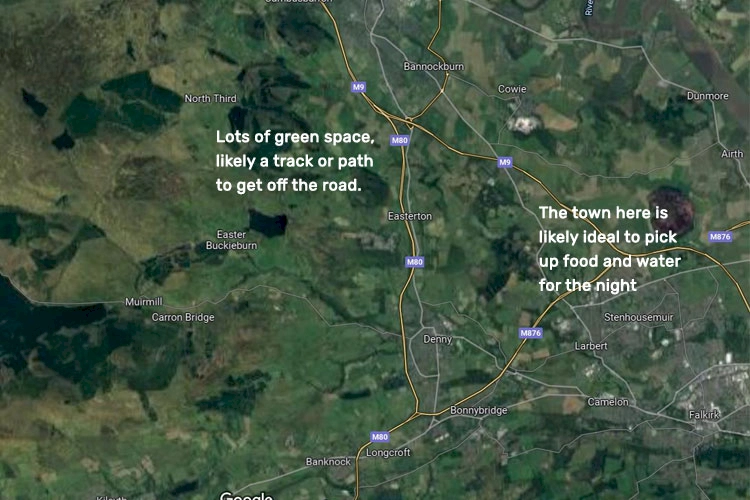
Step 1: Look at a map before you head off
Take a look at the map and make a guestimate at where you might be when it’s camping time.
Once you know roughly where you will be you can look for green areas, off the road. Ideally, you’ll find a spot where there’s water.
Step 2: Consider your options for food and drink
You want to make a plan for where you can get your last meal of the day or buy food to cook once you bed down to camp. You definitely want to make sure you’ve got plenty of water. Usually Stew and I mark the last town or village we’ll be riding through and that’s where we stock up. The bike can be pretty heavy for the last hour of riding, but that’s alright.
Step 3: Find your camp spot
When you’re on the road and approaching the area where you thought you might be able to camp start looking for a small path off the road.
Ideally, you’ll want to be away from people and cars when you make your move off the road. We tend to start looking for a camp site as the sun is going down.
Tips we learned on the road
We’ve now camped in several countries and never had a problem. We’ve even camped in the worst places, like alongside the motorway in China!
Here are some of the tips we’ve learned on the road.
Stay hidden
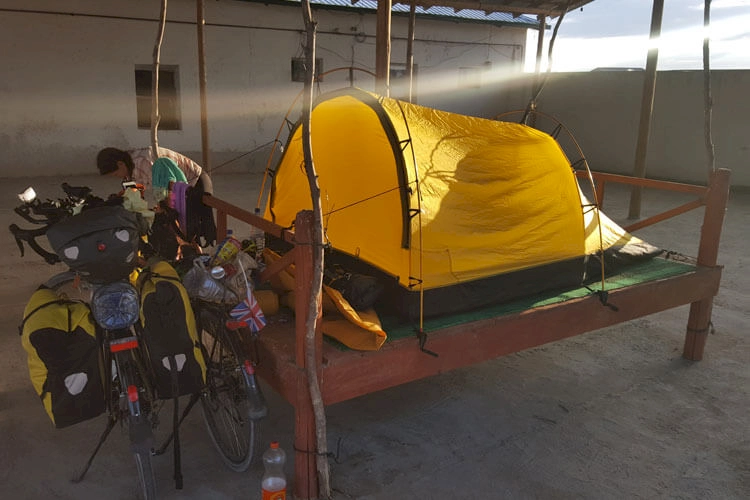
This one feels quite obvious, but do find yourself a stealth camp site. Tuck your tent way off the road. For us this has meant unloading our bikes and carrying everything up and over banks, sand and more.
There was only one occasion where our camp spot wasn’t ideal and we woke up, in China, to find the water company had arrived to our spot and found our being there most peculiar.
Have a quick meal prepared
Our favourite quick camping meal is:
- Tinned tuna in oil
- Veg of choice
- Spaghetti
- Salt, pepper, herbs and spices

Fry off the veg in the oil from the tuna, boil the spaghetti then throw it all together. If you’re eating something like rice or beans you can soak them on the bike as you make tracks to your camp spot. Throughout the day lentils, beans or rice will soften and absorb the water meaning it’ll cook, faster.
If you don’t mind going without a hot meal your dinner will be even more efficient. It helps to have something you can not cook (or cook quickly) and feel satisfied with incase the weather turns.
Stew and I have definitely found ourselves miserable in a tent, munching on tomorrows unsatisfactory lunch, or the last bits of food in the pannier, from time to time!
Prepare breakfast for the next day
Before Stew and I go to bed we like to prepare breakfast for the next day. For breakfast we often eat:
- Porridge oats cooked in water
- A dash of condensed milk (so good)
- Fruits
I’ll usually at least put the oats in the pan, have the condensed milk, fruit and water easy to grab so we can cook up a quick breakfast and be on our way.
Make sure your tent is level
If you want to sleep well, make sure your tent is as level as you can get. If your tent is on a slope you’ll find yourself slipping to the bottom!
If you’ve got no choice but to pitch on a slope, make sure your head is higher than your feet.
Take warm clothes
It always helps to have warm clothes, especially if you’re camping in cold conditions. At the coldest, Stew and I have slept in -6 and that night we wore clothes to bed, a down jacket, gloves and a hat. And it was still cold!
Have a headlamp
A headlamp is invaluable! You never know what time you’ll manage to find a spot when wild camping so a headlamp is good preparation for the worst happening and you pitching in the dark. If you need to get out for a toilet break you can wear the headtorch and if you want a little light in the tent you can have your head torch on hand for that, too.
Bring your shoes into the tent
We always bring our shoes into the tent, or we put our shoes into a sealed bag. The last thing you want is to put your shoes on and find something has crawled in and made a bed for the night!
Bring any valuables into the tent
This one feels quite self explanatory, the biggest thing for us is a better nights sleep, not worrying about valuables.
This video shows how we pack our tent and what we bring inside
or leave in the shelter outside.
What should I pack for a wild camp?
What you need to pack depends on a lot of things, but the basics are as follows:
- Tent, groundsheet, poles, pegs etc.
- Sleeping bags suitable for the temperature you’re sleeping in
- Camping mats are amazing, they add a little comfort between you and the ground and help massively with heat since they act as a barrier between you and the ground.
- Stove and kitchen if you’re cooking
- Enough food for the night and morning
- Enough water
- Extra warm clothes incase you get wet or the temperature drops in the night
How do you get to water when wild camping?
As mentioned before, we usually fill up our bottles before we head for a camp. We go to the nearest shop before arriving at a campsite. We load up our bikes full of water and carry an extra 2-4 litres. Usually, we have too much, even after cooking, so we drink it throughout the next day.
If you’re really lucky you’ll find a spot close to water so you can go for a wild swim, take a shower or fiter the water for drinking.

The dos and don’ts of wild camping
There is such a thing as camping etiquette, here are some rules to live by:
- Do take any and all of your trash with you.
- Do protect the wild life around you
- Do check the weather and prepare for it accordingly
- Do have enough food that doesn’t need cooking (just incase)
- Do take a water filter and/or enough water to drink for the night and morning
- Don’t make a lot of noise after hours, enjoy the sound of nature instead
Your wild camping questions answered
Is wild camping safe?
Wild camping is generally very safe. For starters, if you’re camping stealthy, which you should be, no one will know you are there.
To optimise your safety make sure you research the area before you go and camp with a friend.
The only area Stew and I were a little nervous to camp was Bosnia because there are still active landmines! Other than that we have always felt very safe.
What are the benefits of wild camping?
Wild camping allows you to get away from it all and connect with nature. It’s a great way to enjoy the outdoors and truly be at one with nature. I love it when it goes dark and I’m all cosy in my tent hearing the wild life around me.
When you’re wild camping you’re generally isolated. There are no noises from people around you.
Is wild camping legal?
Wild camping laws vary from country to country, and even, from area to area.
For example, it is generally illegal to camp in England and Wales. However, you can wild camp legally in Scotland in most areas. Within Scotland there are areas where it is illegal to wild camp and in England there are areas where it is legal to wild camp.
Before you wild camp you really need to do your due diligence and check the area.
How do you go to the toilet when wild camping?
If you want to wild camp, you’ll have to get comfortable with wild wees!
Going to the toilet is easy, just find a spot, out of the way, away from any water sources and do what you need to do.
When we’re camping I try not to do my business outside, but sometimes, need must! If you’re going for a poop you need to:
- Use a trowel to dig a small hole, 6 inches deep should do it.
- Do your business
- Bury your waste
Do not poop near water sources!
What does leave no trace mean?
Leave no trace means to leave the area exactly as you found it. This means packing out all of your trash, not leaving any food behind and generally not disturbing the area.
I like to do one better than leave no trace and that’s: leave an area better than I found it! I look for bits of litter that I can pick up and take with me. I might not get it all but when I leave a wild camp spot it is generally better than when I left it.
The concept of leave no trace is really important. The idea is to minimise the impact on the environment.
Leaving no trace will likely include:
- Camping on a suitable surface where your tent won’t damage the ground
- Moving the tent if you camp multiple nights
- Disposing of waste properly
- Leaving the wildlife alone
- Minimising damage from campfires, or not lighting one at all
- Taking all of your rubbish (and pick up a few pieces of someone else’s while you’re at it)
For more articles that will help you create your own adventures, read:
- How to Start Cycle Touring
- How to Quit Your Job and Travel the World
- Our Cycling Route Around the World
Post written by: Zoe Ashbridge
Comments
Ask a question or join the discussion below.
Go back to Cycling & Touring Tips, Tricks and More to see more content like this or checkout similar content below.
Back to Cycling & Touring Tips, Tricks and More
No comments have been made yet, be the first!