Cycling Through The Police State Of Xinjiang
Okay so there are a lot of police in Xinjiang.
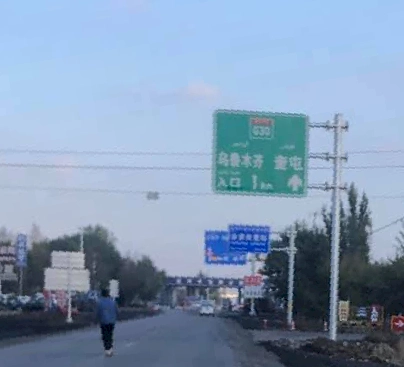
I don’t have pictures of them for obvious reasons, but in this picture you can see the blue banner at the end of the road, that’s a police check point.
We’ve had a few encounters with police now, all different in each town – here’s a breakdown of our experiences:
👮🏽♀️ Police encounter 1: we left Khorgos and rolled into a small town before we started our mountainous climb. Everyone gets checked by the police, it’s a totally normal procedure, but foreigner checks take a little longer. Think of the police checks as mini-passport-control. It’s something most of us are familiar with and for us it feels pretty normal now.
We were asked to step to the side, a friendly policeman with a little English asked us the standard questions – where are you going? Where did you come from? We answered, he took a picture of our passport and we moved on. Time: 2 minutes.
👮🏽♀️ Police encounter 2: as we were climbing the mountain a police car pulled to the side of us. We were expecting to be moved on or something. He asked if we could speak Chinese, we said no – he kindly asked us to be careful cycling and left. It was a sweet encounter. Time: 40 seconds.
👮🏽♀️ Police encounter 3: On our second cycling day we rolled into Jinghe, we were staying here for the night. We had another police check. Again we were pulled to the side and we sat in a room with the SWAT team. They took our passports, asked where we were staying, where we were going etc. This check took a little longer, we were entertained by the woman wearing a SWAT jacket, swatting flies…it’s the simple things…🤣
The room we sat in had cameras all around it and 4 screens showing video footage of the town just outside.
Stew noticed that when we arrived at our hotel a police car was outside. We assumed they were checking we actually went to the hotel we said we were going to, as when we were both inside they left. Could be coincidence. Time: 10 minutes
👮🏽♀️ Police encounter 4: we entered another town on cycling day 3. Their procedure was simple. I accidentally cycled past the police control area, but I was soon pointed in the right direction. We handed our passports over, but no questions were asked. In some ways I wish they’d asked which hotel as perhaps it could’ve saved us trying 8! Time: 10 minutes.
👮🏽♀️ Police encounter 5: we were cycling along the G30 when Stew noticed flashing red and blue lights in the sign ahead. He signalled for me to stop and we did. The car had a speaker and the driver said “GO GO GO” so we carried on. They just followed us with no instruction for 2km until we reached the services. As we approached the police drove off and we thought that might be the end of it, they signalled for us to go to the services. We were heading there anyway.
They stepped out the car and kept a phone camera on us at all times while we conversed. They said they were the police and we were not allowed to cycle on the G30, as it is dangerous.
In fairness, the G30 is the main road, essentially a British M road/motorway, but trust me cycling along the G30 is the safest I’ve felt the entire trip. It’s a 4 lane motorway, new, perfect smooth tarmac and barely a car in sight. No one uses it. I’m baffled!
Anyway, the police took us to the services, got us a hot water – just boiled water out the kettle, but this was very warmly received. We chat a bit, they checked our passports, asked us the standard questions then asked us to moved onto the G312, which runs adjacent to the G30. It’s a narrower road with way more traffic and takes you through small towns and villages which means more police checks for us. Now we understand why the first few days were so peaceful.
These policemen were lovely! One guy took my bike over the rougher roads to help, helped me carry my things and insisted I put my jacket on before we all stepped out into the cold. They asked for a picture before they “let us go” and wished us well. Time: 40minutes
👮🏽♀️ Police encounter 6: we rolled into the penultimate town of the day. A female police officer dealt with us – she took our passport and asked us to follow her. She explained we would need to “take a car” through this town. We were going to be escorted.
We weren’t allowed to cycle completely freely for some reason. The situation was handled very kindly from the police who first asked if we wanted to eat – we did. The policeman in the car escorted us with with flashing lights to the restaurant, patiently waited outside while we ate our dinner then escorted until we reached the end of this town. It was about 10 miles (16kms) – I can’t imagine how bored he was driving that at 9-12mph (14-20kmh). (Time 5 minutes +1 hour of escorted cycling)
👮🏽♀️ Police encounter 7: the escort dropped us off at the end of his town, and the beginning of another.
I expected another escort, but they just took our passport, asked the same standard questions. The policeman who dealt with us asked for a picture…we weren’t sure if this was part of the procedure or not – probably not because the policeman stood between us posing with our British passports haha, bikes were in the background. Time: 5 minutes.
👮🏽♀️ Police encounter 8: We arrived at the town we planned to sleep in. Our passports were checked, we were asked the standard questions and we breathed a sigh of relief when the policewoman recognised the hotel we planned to stay at! Time: 5 minutes.
When you list all the encounters it looks like a lot, I suppose it is really, but they are quick, painless and on the whole pleasant. Police are just doing their jobs and we haven’t found them troubling or particularly time consuming.
We did a little research before we crossed the border to China and as far as we understand it the police had relaxed a lot. Our experience seems to support this, but we’ll let you know if it changes!
When at a police stop I just think back to the curiousity and conversations we’ve had with local people along the way – they often ask where we are going, where we came from, how many miles we cycle. It’s a pleasure to talk to them and share the journey. When dealing with police in xinjiang we would suggest taking a load off, enjoying the encounter, appreciate they’re doing their job and have a nice conversation. They’re just doing their job, they’re doing it well and for us, on the whole, it’s been a pleasure.

Post written by: Stewart
Comments
Ask a question or join the discussion below.
No comments have been made yet, be the first!